Rustar
Home
Community
Game
Albums
Back
Blacknetbar
Oct.26,2023
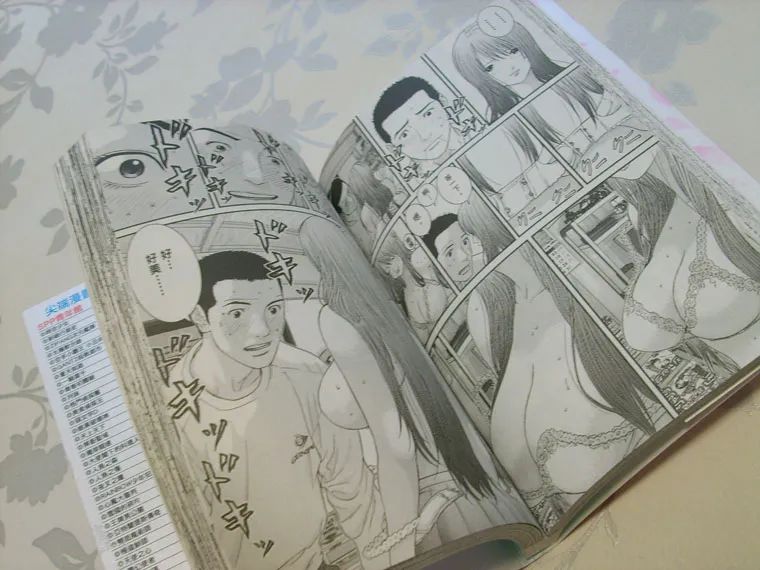
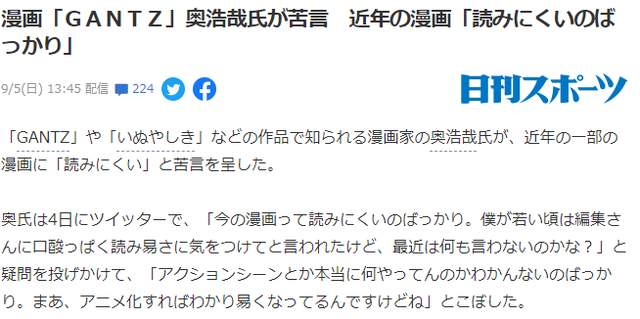
A battle between Japan and Korea?! "Chests" are the true way! In the 1980s and 1990s, the anime industries in Japan and South Korea experienced a golden age. In Japan, nationally renowned works like "Dragon Ball" and "Slam Dunk" were exported to the global market. During its peak, "Shonen Jump" magazine in Japan even reached a single-issue sales record of over 6.53 million copies in 1995, with one in every four Japanese children purchasing it. However, in the first decade of the 21st century, mobile internet completely transformed the manga industry. The dominance of Japanese anime began to decline as various types of "webtoons," quick-service "internet comics," shattered the old paradigm. South Korea, a place where the physical manga industry struggled, hopped on the high-speed train of mobile internet. It steadily made its way to break the dominant positions of manga in Japan and the United States. Not only did it successfully reverse-export to Japan, but it also radiated globally. Many traditional Japanese manga creators began looking for new paths, but it was not always smooth sailing. For example, Oku Hiroya, a Japanese manga artist known for works like "GANTZ" and "Inuyashiki," once complained on Twitter, "It's hard to read manga these days. When I was young, editors always reminded me to focus on readability. Do they not say anything now? Action scenes are unclear, manga scenes don't flow together, and the background is poorly drawn." Oku Hiroya, a prominent Japanese manga artist, was born on September 16, 1967, in Fukuoka City, Fukuoka Prefecture. His notable works include "GANTZ" and "Inuyashiki." Previously, Oku Hiroya received quite a bit of attention when he drew the characters' "breasts" in his work very large, which led to a wave of enthusiastic criticism from netizens. However, Oku Hiroya explained that he took inspiration from Osamu Tezuka's book "How to Draw Manga," which collected countless manga artists' Bible "how to draw manga." In Oku Hiroya's case, his work "GANTZ" is likely well known to you, and it's that "classic" from the early days. Before, I used to think "GANTZ" was terrible, but recently I re-watched it. Combining the current status of the Japanese anime industry, I feel like apologizing to Oku Hiroya! Anyway, his notable work allowed him to raise the question of "the decline of traditional Japanese manga," and it seems quite reasonable. In the current commercial trend, many anime works are produced rapidly. In recent years, looking at the individual panels alone, you can see that many anime have been left out. In search of a breakthrough, Oku Hiroya introduced a new era of manga techniques by publishing the first-ever manga created entirely with 3DCG, "01 ZERO ONE." Unfortunately, due to heavy investment in production, a lack of funding, and low popularity, it was discontinued mid-series. Yet, the skills weren't wasted, and Oku Hiroya continued to use 3DCG in many of his subsequent works, including "GANTZ" and "Inuyashiki." The backgrounds became extremely realistic, and the time saved on backgrounds was invested in drawing characters, making the artwork more detailed. "Inuyashiki" even utilized drone aerial photography, with processed photos used directly in the manga. From Oku Hiroya's criticism, it seems that Japanese anime today has gradually reached a state of saturation and is on a declining trend. As time continues to progress, the quality of anime production improves. However, manga creation is quietly regressing, and it has been a while since we've seen a truly outstanding classic.
#News
props
share
0
6
2
Best Comments
No more
Add a comment
Selected Games
Snow Bros.
Legend of Zelda - The Minish Cap
Pro Evolution Soccer 2014
Street Fighter II - Champion Edition
Tekken 6
Mario Kart 64
Download Rustar APP
Join Telegram Group