Rustar
Home
Community
Game
Albums
Back
happy melon
Nov.3,2023
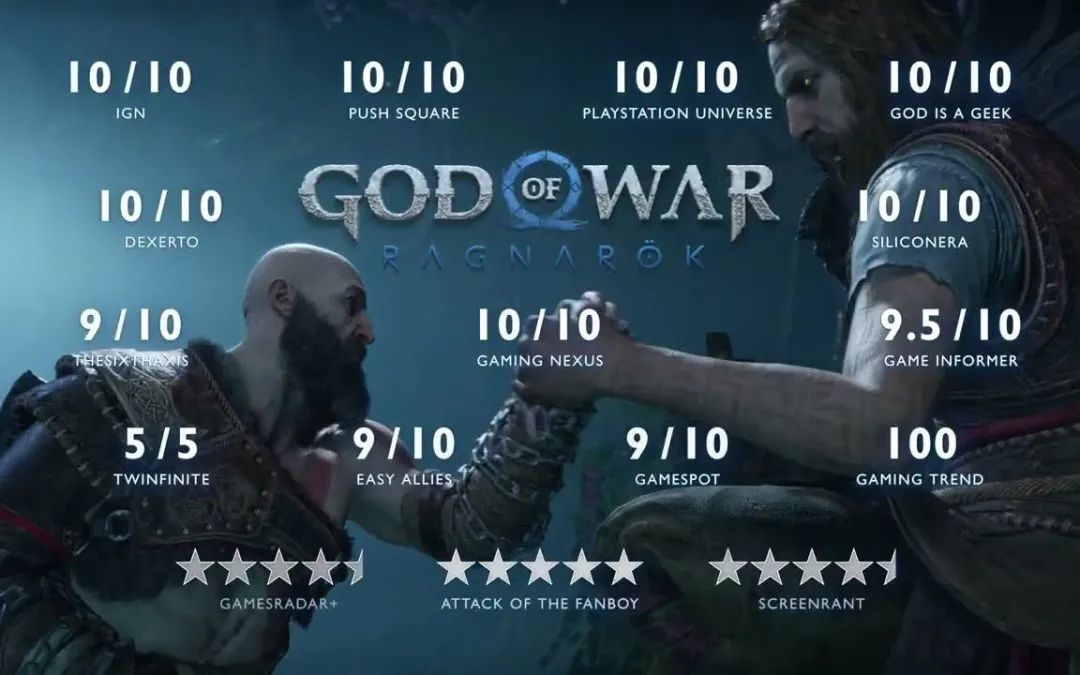
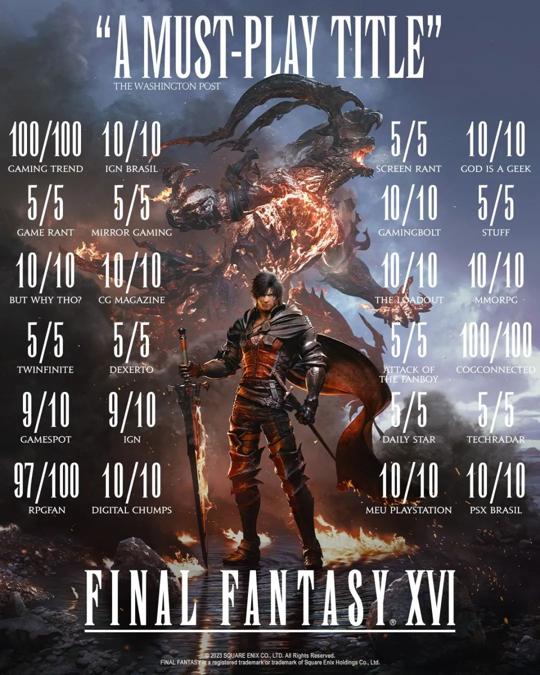
Despite an increasingly sophisticated rating system, why are players no longer paying attention? It has been over half a month since the release of "Final Fantasy 16," and most of you who purchased the game have probably completed the storyline and successfully finished it. The game received positive reviews from media outlets upon its release, with IGN and Gamespot both giving it high scores of 9/10, and Metacritic averaging an 88. These scores highlight the greatness of "Final Fantasy 16." However, the player reception of the game has been mixed, with some finding the story of "Final Fantasy 16" captivating, while others feel that the character development in the game is lacking. The player rating on Metacritic stands at a modest 7, which is barely a passing score. This situation brings to mind "The Last of Us Part II," where there was a sharp contrast between highly positive media reviews and strong opposition from the player community. Many people have said that game review media has become a joke. Over time, game rating mechanisms have become more refined, and situations like "The Last of Us Part II" with extreme polarization between media and players have become rare. However, this doesn't necessarily mean that players and media opinions have converged but rather that "players are no longer interested in media ratings." So why are players becoming less interested in game ratings? Ultimately, it's because the practices of media outlets have become less trustworthy. In the past, when a major AAA game was released, players would typically check the ratings from various media outlets first. Both game companies and players considered "ratings" to be a significant factor. Game companies needed positive evaluations from major media for future marketing, while players relied on these evaluations to decide whether to purchase the game. Therefore, media ratings became a crucial factor for both companies and players. The value of authoritative media lies in its "authority," but it is also the easiest thing to deteriorate. Many media outlets have already turned against players due to game companies' "sweeteners." It's essential to understand that the environment for media reviews differs significantly from a player's experience when playing a game. In fact, the game media often receives a "special edition" provided by the game companies. Hence, this can lead to situations where a game is deemed relatively well-optimized and smooth-running by the media, such as "Cyberpunk 2077," but when players get their hands on it, it becomes a struggle to run the game, and it is viewed as "trash." Another often overlooked point is that "the same media outlet does not have the same reviewer for each review." For example, a well-known outlet like IGN may have different reviewers working on game evaluations at the same time. Even the largest authoritative media outlets do not have the time or resources to have every reviewer evaluate the same game. Furthermore, everyone's judgment criteria are different, and when reviewing, subjective consciousness can inevitably be involved. So, in reality, what players see as ratings from the same media outlet is written by different reviewers. Evaluating a different game is equivalent to using a different reviewer, not to mention the common situation where IGN ratings in different countries are not consistent. It's because each media outlet and its reviewers have their evaluation systems that websites like Metacritic are needed to aggregate relatively objective average scores. However, this objective rating is still relative. These rating websites do not require a player to spend a certain amount of time playing the game before they are eligible to leave a review, so even those who have never seen media ratings can give scores. This can result in mass negative reviews due to minor design choices that don't match players' tastes. If a game receives extremely low ratings, it probably isn't viewed favorably by the players. However, it's essential to remember that game quality shouldn't be solely determined by the "subjective" ratings from the media. We should follow our own thoughts, watch gameplay videos, and personally experience the game to come to a conclusion, which is what a normal player should do. Of course, this doesn't mean that all media ratings are entirely untrustworthy. If a game receives just one or two points in ratings, it's unlikely to be well-regarded by players. So, the key is still the same: trust media for low ratings and trust yourself for high ratings. What are your thoughts on game ratings? Feel free to discuss in the comments!
#News
props
share
0
9
1
Best Comments
No more
Add a comment
Selected Games
Marvel Vs. Capcom: Clash of Super Heroes (Euro)
Mario Kart 64
Dragon Ball Z:Shin Budokai
Super Mario Bros. 3
Call of Duty - Roads to Victory
Super Mario World
Download Rustar APP
Join Telegram Group